
Pink Sneakers
The Metaworker/December 16, 2022

The woman passes every day with her pink sneakers and floral running pants and cute son in a navy uniform. The son talks a blue streak while the woman nods, her head down, repeating, “Uh-huh.” Sometimes they notice me, sometimes they don’t. Sometimes the woman in the pink sneakers smiles a straight, close-lipped, no teeth smile. Sometimes she just nods…

The Midwife

Diet Milk Magazine/December 4, 2022
Even before Clara entered the house, she sought the smell of death. Her midwife’s nose was attuned to it, honed over ten years of guiding struggling life into the harsh light of the world.
The housemaid, Susie, sat in the late night shadows, holding a flickering candle, her face blank and pale.
“Any news?” Clara asked breathlessly, removing her shawl and muddied boots.
“The tonic did its work. He passed just one half hour ago, mam. I washed and dressed him. The birth?” she whispered, handing a lit candle to Clara.
“Troublesome, but the child lives. Tonight of all nights.”
“We’ve done some good this night,” Susie said, patting Clara’s back. The two women trudged upstairs.

Dream Song
Heart Balm Literary/Issue 2/December 1. 2022


Dream Song
Miranda’s disappearance really began that early June day, the day the book she held in her hands at the library’s circulation desk fell open on the ground. The poem on the page demanded to be read.
Sunlight, moonlight,
Twilight, starlight.
Gloaming at the close of day,
And an owl calling,
Cool dews falling
In a wood of oak and may.
She drank the words down, absorbing their rhythm into her bloodstream, her heartbeat, her footsteps. For the rest of that day, she floated above the stacks and desks, softly singing the dream song.
***
Miranda sat with her sister Sam on their bench by the pond, eating sandwiches and watching two brilliant white swans hooking their question mark heads.
“I need to tell you some news,” Sam said, breaking the peace.
A siren wailed in the distance, cars honked. She moved straighter in her position on the bench.
“I’m pregnant,” she said, looking expectantly at her sister. Miranda stopped chewing, her mind paused over her sister’s words. She wiped newly formed sweat off her brow and swatted at a fly.
“That’s what you wanted, right?”
“Right,” Sam said.
***
Lantern-light, taper-light,
Torchlight, no-light:
Darkness at the shut of day,
And lions roaring,
Their wrath pouring
In wild waste places far away.
The day of Sam’s news, Miranda breathed deeply as she entered the Green Lakes trails, feeling the acceptance of the trees, her trusted friends. She ran, slowly at first, shaking off her disturbance, whispering the words of the dream song, steadying her mind. She moved away from the lake’s beach area, away from the sunshine, into shade. The voices of children playing and adults talking and laughing fell away like an old heavy coat. She felt lighter, knowing there would be no indecipherable discussions here, no awkward conversations, no bad thoughts of intrusion, jealousy.
A strange, sharpening of senses overcame. She stopped abruptly, like a squirrel on its hind legs, alert, sniffing, eyes shifting, checking. Nature pulsed around her--smells, textures, forms, colors, light, shade. Her body, alive with the energy of the run, her mind, heart receptive, prickly with input.
In this state, she imagined all kinds of lost things found, fixed: speckled blue bird eggs whole and perfect, schools of fish rising to the surface of water, iridescent fins flashing like rainbows, billowed lips catching worms held out on hooks, a long lost wedding band shining in the sunlight. The invading image of her sister’s baby, pink and fat, brought a coldness over her, like a slap of ice water.
The anxiety was eased by her dead father’s appearance on the trail, vivid before her, his long, lined face emerged, appearing in not just one tree but all trees, so that as she ran, his face met her, from tree to tree to tree. Each time, she met his smiling eyes. She could not speak to him, she knew. It was clear to her he existed just for her sight, her own comfort. She gulped it all down, allowing his peace to tingle through her body, from her beating heart down to her fingers and toes.
In the wind, her mother, too, emerged. In life, she had been a woman of inexplicable, extreme emotions. Here, she blew sweet air in gentle waves, ruffling Miranda’s hair off her sweaty forehead. Miranda continued to run, soothed, unafraid of her parents’ apparitions.
Elf-light, bat-light,
Touchwood-light and toad-light,
And the sea a shimmering gloom of grey,
And a small face smiling
In a dream's beguiling
In a world of wonders far away
Now the dream song called her to the lake. The bright green presence of water asserted itself just beyond the edge of the woods. She stopped at its tip, got closer, stared down through the emerald surface. She searched for life in the water, seeing only weeds, roots, petrified wood protruding from prehistoric layers.
Finally, the wind shifted. Miranda’s breath drew short. A small nose and rosebud lips poked through the surface of the lake. A baby, gasping and crying out, just born. As if being pulled by a hand somewhere below, the baby jerked from exposure, receding into the water. Miranda’s hands reached out. Her chest heaved up and down and her nostrils flared. She turned to look for someone behind her, help. Nothing. No one. She ran back into the woods, back onto the trail, seeking her mother, father, Sam, someone.
She stopped in her tracks, the wood chips of the trail flying. Miranda thought of Sam’s baby, her niece, and ran back to the water, where the rings from the infant’s appearance still reverberated. She summoned her last bits of dizzy energy. She dove, the shock of the icy water a surprising relief.
***
“Are you sure your sister wasn’t meetin’ someone? Someone you don’t know?”
The officer who arrived to investigate removed his cap and wiped his brow,
“She’s not social,” Sam said.
The officer stared blankly.
Sam stood on the beach, next to a smoldering bonfire from the night before, the wood cooling, growing whiter each second. Another officer approached.
“No luck, mam,” he said, “We think we need to call in the divers.”
Sam doubled over in despair, cradled her belly with one hand, touched her chest with the other.
“She couldn’t swim!” she yelled, voice echoing across the lake.
***
Sunlight, moonlight,
Twilight, starlight.
Gloaming at the close of day,
And an owl calling,
Cool dews falling
In a wood of oak and may.
The words of the dream song formed in her mind naturally, as though Sam had always known them. She hummed softly as she went to work and home, as she stood and pressed the pretty clothes collected for her baby.
She felt distanced from everyone - underwater, unable to hear or be heard.
The world became muffled, blurry.
Her baby girl remained present inside her, pulsing, crystal clear, growing bigger every day, stretching skin.
Sam’s baby kicked with life, waiting to emerge out of her darkness, pushing up out of the deep water, into the light.

After the Loss

The Bookends Review/November 2022
Morning was the better time. She lit the match, touching the flame to the small candle’s wick, and it took, wriggling with new glow. Since Max’s death last year, Sarah kept a collection of his belongings gathered around the candle - his watch, wallet, phone, the pen found in the pocket of his jeans. She added his favorite Matchbox cars, Pokemon cards, an old school pencil whose eraser was worn down to its nub. Every morning, as the grim winter sky emerged from the night’s darkness, she went to her candle, sat with her son’s things. She did not pray. She sat in silence and attempted to quiet her mind…

Small, Precious Things

Final Girl Bulletin Board, November 2022

Metastellar, May 2023
All William knew of his father was a leather box his mother kept hidden in her underwear drawer with a bunch of teeth inside. Although he never knew for certain, from its first discovery William believed this box had something to do with his father. When his mother was at work, William opened the box and lined the teeth up on her bed, sorting and counting them. Sometimes he’d arrange them largest to smallest, sometimes by depth of stain.
Whenever William asked his mother about his father he received a cold stare, sometimes tears.
“I told you never to ask about him,” she’d whimper into a tissue…

Letter Home

Your Fire Magazine, November 2022
Dear Elizabeth,
I’m hiding, writing this under a tree, using it for cover. My mother’s calling me: “Theresa! Thereeeesaaaaa!” Her voice is so small, but the hairs stand on my neck with just the slightest strains of her unwelcome wailing. She’s always wondering where I am. I know you will tell me to embrace God’s will, get praying, working, this too shall pass. But I’m not at the convent, I have been sent backwards, to the place I left long ago, to care for my elderly parents and my bad back. My head, so grey, cold and exposed without the veil. Is this God’s will? Will this pass? I do not feel God here. I know, I shouldn’t say such things…

The Wileys’ Horses
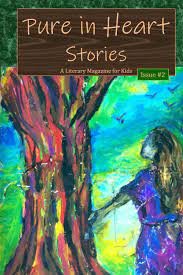
Pure in Heart Stories/November 11, 2022
One day, we looked out the kitchen windows to see the Wiley’s horses standing in our backyard beside our basketball court. The smallest one, Astral, the one with the big star on her forehead, was not there. There were usually three.
The Wileys fancied themselves farmers. Along with the horses - Inky, Ruby, and Astral-they had a pack of dogs, a flock of chickens, and a hoard of cats. They had a barn tucked down below the hill where their small house stood, but the horses were often out wandering, standing solemnly in different places all over their property, and often on ours.
Getting it Straight
Apple in the Dark/Fall 2022

“Thanks a lot,” Moira said to no one, standing in the light evening rain, holding the Nice parking job, dumbass! note pulled from under the windshield wiper. She walked around the car parked in the grocery store lot, examining it pulled halfway into the spot, end popping out on the diagonal. Her ex, Trevor, always hated how she parked, her short hair, her nail biting, how she pronounced chocolate (chawklet). What a day, she thought- getting reamed out by Dr. Springer for being two minutes late, dropping a bottle of olive oil in the grocery store, creating a slick in the path of a teetering elderly couple, saved by the mop-wielding grocery store employee just in time. Moira tensed as she turned the car’s ignition key. Backing up, she checked and rechecked the rear view mirrors. Her foot tapped the gas then the brake, while the windshield wipers made their rubbery sound - move, stop, move, stop, carefully, so carefully, so as not to offend.

Beating the Drum
Your Fire/ Issue 2, November 7, 2022

The note on the table said Much pain! and had a bloody rag beside it. Greta immediately sent a group text to her two sisters.
Something up with Mom and Dad.

Exes

Third Wednesday/November 2022
There she was.
Patti, wearing an emerald green jumpsuit, entered the busy cafe. Grayson gasped a bit, waved a hand, faked a big smile, concealing his nerves.
“Have a seat, “ he said before saying hello. He stood to give Patti a hug, then changed his mind halfway, offering his awkward hand across the table, backside hovering over the chair.
Her handshake was strong, but soft.
“This is different,” Grayson said, placing a napkin on his lap.
“Not that different,” she said, “You’re still Mr. Handsome.”
Grayson blushed foolishly as Patti smiled, ordered, pushed a lock of platinum hair behind her ear. Her shimmering face contrasted with a flat red lip. His gaze moved from her face to her neck, to breasts, to hands, then back to her grey eyes. Those eyes. He repressed his bubbling questions: When did you know? Are you just on hormones? Did you get the big snip snip? His groin throbbed in discomfort just thinking of it.

Letters from the Void

Longlisted in Pigeon Review’s 2022 Flash Fiction Competition
The Airgonaut/November 2022
To the innocent early seventies,
You didn’t know cell phones. Or 24/7 newsfeed. Or Internet. You had this hazy, slow-moving, swirly feel. You kept us in a cloud of sitcoms, endless games of hide-n-seek. Sure, you shared some things, like the Beatles breaking up, or the invasion of Cambodia, the gas and hostage crises. Of course life was bad, like always, like now, but I was very young and I just didn’t know how, well, how horrific things could get.
Alan and I folded newspapers on the den floor watching the Six Million Dollar Man. We filled our bags and jumped on banana bikes, flinging the news onto neighbors’ lawns. We freely roamed the streets of the neighborhood, without care or concern, without telling our parents. We didn’t know about the kid in Des Moines who went out to deliver his papers and never came home, or those four children in Michigan found dead in a ditch.
You taught me that ignorance is bliss.

The Annual Halloween Progressive Dinner

Pastel Pastoral, October 30, 2022

Chosen to be read in the Harmony Selected Stories in Sackets Harbor, NY, October 19, 2023
In the bathroom of the first party, the appetizer house, an orange candle burned on the windowsill, its weak flame struggling to survive. Lori, wine-buzz settling in, faced her blurry image in the mirror, eyes obscured by smeared black liner. A green plastic cup adorned with multicolored fish sat at the sink. A child’s toothbrush poked from the top, blue toothpaste sticking to its bristles. Lori clung to the sides of the sink and sobbed.
***
“I was looking all over for you,” Ted lied, as they exited. He clutched her arm in his usual caring/controlling way. “Where to next?” he asked, nodding at the other couples headed out to their dinner assignments.
“Evergreen. 271.” Lori closed her eyes for a minute. She enjoyed the slap of numbing air.
The neighborhood glowed, its sidewalk lined with beckoning luminaria. Jack-o-lanterns observed from their porch places, chuckling with toothless smiles.
“Jesus it’s cold,” Ted said through a clenched jaw, his breath hanging in a white puff. They trudged on in their standard tense silence.
“We’re here. Put your happy face on, dear,” he said, dropping her arm. They stood before an aged two story home.
How had she never noticed this house before, with its crooked shutters, peeling paint? It seemed like the only house in the entire neighborhood in disrepair, without decoration, with only broken pots, piles of wet, dead leaves, cracked steps leading to its front door.
“Just our luck,” Ted said, knocking.
A gust of wind blew through, leaves rustled in its wake. Lori turned. Off in the wide side yard, a lush green tree stood in a spot of moonlight, contrasting with the deadening October trees.
“Wait. What is-” she began to say when the door creaked open. A yellow light streamed from the house, enveloping them in its tarnished gleam. An older man with death-white skin stared solemnly at them.
“Have you come for supper?”
“Er…yeah. It’s a dinner party,” Ted said edgily. In an instant a younger woman with the same skin and dark clothes appeared, invited them in.
“Hattie Lane,” she said. “This is my father, Walter.”
Lori noted the mission style furniture and matching grandfather clock.
“This is lovely,” she said. “Just the way these houses are supposed to look.”
“Thank you,” Hattie said. “Come and sit in our living room.”
“Who else is coming?” Ted said.
“Others? Others are coming?” Walter looked with panicked eyes at his daughter.
“No, no, Daddy, just this nice couple, Lori and-“ Hattie looked at Ted.
“Ted Gravely.”
Hattie drifted out of the room.
Lori enjoyed the ticking clock and the soft cushion against her back. She breathed in deeply, relaxed her shoulders. Was she a child again? Was she home in Ohio? She felt the soft length of a purring cat against her leg, reached down to stroke it, but her hand was only suspended in air, petting emptiness.
Ted and Walter sat facing one another.
“How long have you guys lived here?” Ted asked.
Hattie drifted back to the sitting room. She carried a tray holding a steaming pot and china cups.
Lori straightened up in her chair. “Tea’s just the thing on a cold night like this.”
“I’ll pass,” Ted crossed his legs. “How long did you say?”
“Say what?” Walter asked.
“How long have you lived here.”
“We’ve always lived here,” Hattie said, handing a floral china cup to Lori, “I was born in
this house.”
At that, Walter’s face changed and he became agitated.
“Agnes!” he whispered urgently, clenching his right fist in his lap. Ted’s knee bounced in discomfort.
“Mommy is still at the nursing home. We expect her to come home soon though. Daddy is anxious.”
Hattie invited them into the dining room. The table was laid with white china plates laced with gold leaves and fall flowers. Silver serving bowls and platters carried roast chicken, vegetables, and potatoes. Lori spooned gravy over her dinner and tucked in, eating until she found a perfect fullness. Ted’s eyes glistened, glazed with gluttonous joy.
“Now, before we have dessert,” Hattie said, “do you think your son would like to join us?”
“Our son-” Ted began.
“Our Robby- died- leukemia- last year,” Lori said matter-of-factly, feeling a rush of relief.
“Would he like to ride his bike along our dark aisle?” Walter said.
“Yes, we’d love to have him here, if you’ll allow him to join us. And you can come too, when you’re ready,”
Hattie said. She reached a cold hand across the table to touch Lori’s.
“Isn’t it too-” Lori was going to say too cold, or was she going to say too late?
“We need to head to the dessert house. Now,” Ted said, pushing his chair out to stand. “That was delicious and all, but-”
Lori turned back to say thank you and goodbye one last time.
“Goodbye! Goodbye!” Hattie and Walter waved as the door closed behind Lori and Ted. The lights blinked out. The broken shutters clanked in the autumn wind.
***
“I need a drink after that--“ Ted said, rushing into the dessert house. Lori followed him inside, where once again the neighborhood crowd gathered, louder, drunker than before.
“Where were you two? You were assigned to our house for the dinner,” Sally Slocum scolded. Ted rushed to the bar. A circle of men opened to receive him.
At the window, Lori pressed her forehead to the cold panes. How nice it must be, to live somewhere so long - like Hattie and Walter-to live with your mother’s plates and recipes. How comforting, knowing for sure she will come back, soon.
The fleeting shadow of a moving bicycle cruised by in the darkness. Lori watched as long as she could, then moved toward the door.
She left quietly, without saying goodbye.

The Book of Spells


Manawaker Studio’s Flash Fiction Podcast/October 2022
and
Haunted Words Press/Issue 4/Resolutions/Spring 2023
The laughter rang in my ears constantly.
They called themselves the Witches of Wharton Street. It had been a joke before, the three friends assuming that nickname, but after Vera died the three haggard women met each night in the cold, laughing echoey, murmury cackles around a roaring fire pit in front of Corrie Beecher’s house.
Mom knew them all from high school. She greeted them politely at neighborhood events, but said they were “not the brightest bulbs,” which was about the meanest thing Mom ever said about anyone.
Now, all they did was laugh…

Breakfast, like Before

Bright Flash Literary Review, October 3, 2022
A quiet Tuesday morning at Buzzy’s. The owner, Merv, looked up as James entered. His face paused at first, clearly not recognizing the gaunt, hairless replacement for the once-familiar regular. His expression cleared in what James interpreted as recognition.
James imagined the conversations of everyone he encountered, Did you hear James Schmidt got a really bad diagnosis? Those poor kids. Poor Rebecca.

The Dead Come for Christmas

A Very Ghostly Christmas/October 2022

The Stray Branch/Spring/Summer 2023
Polly was a pale girl with red hair who often thought about death. Her brother and sister and parents had died when she was very young. Her brother’s body in his dark suit, the first she had ever seen, frightened and intrigued her. A few years later, Polly knelt beside her sister’s casket, reached for her cool, soft hand. Polly tried to picture what it would feel like for her own warm, familiar body to be stiff, cold. The solid fact of death followed her through her young life. She read the obituaries each week with an obsessive interest, constantly walked the cemetery, studying the names on the headstones.
At 30, after she’d married Liam and had her children, she began seeing the dead people on Christmas Eve. There were hundreds of them, different ages and styles of dress, walking a candlelit road outside her house. That first time, Polly stood at the window trembling, mouth agape. Of course, she was interested, but she was also terrified. She screamed for her son, Jarvis.
“What do you see?” she asked him, pointing out the window.
“Just darkness, Mommy.”
From that point forward, she claimed that Christmas Eve made her sad, and everyone expected that Polly take to her bed for the holiday.
***
The years passed, Polly found herself to be an old woman with all of her family and friends dead. She did not know why she continued to live, why day after day her heart beat in her chest, her skin emanated warmth, her blood trickled through stiff veins.
Her 95th Christmas Eve, Polly got out of bed, moved to the window, and saw the dead marching their solemn march. She stared at their faces, wanting desperately to recognize one of them. Liam? Jarvis? Beatrice? Mama? Papa? Her hand spread out on the cold window, hoping one of the spirit’s own hands would mirror hers on the other side.
Polly took her walker, hobbled outside in her robe and slippers, the icy air clawing up her legs. For the first time in 65 years she walked out among her dreaded dead. They swirled, danced, swept around her, but it was not scary. Astounded by the silence, the lack of sadness, the warmth, she wanted to stay with them, always.
“Mrs. Cantwell!” her nurse, Cynthia, appeared, interrupted Polly’s reverie, pulled her inside.
“What am I going to do with you?” she scolded. “Am I going to have to send you to the home?” Cynthia said, directing Polly inside to bed.
“You better be good, Mrs. C. No trouble,” she touched Polly’s cheek, shut off the light, closed and locked the door.
Polly, her blanket pulled up to her chin, listened to all the sounds, the ticking clock, the creaks and groans of the house. Her eyes moved to the end of the bed, where a collection of spirits assembled. A cloud-like finger reached out, beckoned her forward. Polly smiled, the joy of Christmas, at last, overwhelming her.

The Silence

The Last Girls Club, Wicked Tales, Sept 2022
Not Close
In every old photo, my sister, Therese, is drenched in shimmering light.
She is always happy, either tap dancing or popping out of a cartwheel or hugging Grandma.
In all images of me, I am looking down, or away, caught in a lack of expression, my lips frozen for time in a straight line.
“Celeste is the quiet one,” our parents said, offering an acknowledgement as a kind of
apology. I never knew why my personality had to be forgiven. I always thought of my silence as solitude, strength.
Even my teachers were uncomfortable with me.
Good grades. Too quiet, the comments often read.
Therese always did the things everyone liked, like talk and join the debate and swim teams. On weekends, we followed Therese’s activity schedule. I didn’t even know how to swim. I sat sweating on the bleachers at her meets, staring at the water, imagining dolphins popping their noses out of the water.
Therese and I were never close.
Miscarriage
“I-I need you to come,” she said, a desperate sob, hospital noises in the background, beeps
and loudspeakers.
I turned off my computer and went to my sister.
“There was no-no heartbeat,” she wailed into my shoulder minutes after my arrival. My
mind had to catch up:
1. My sister was pregnant and
2. My sister was pregnant with a not-alive baby.
She caught her breath and attempted to tell me what needed to be done, how this would play out, how she would leave the hospital with no baby inside her.
“Where’s Tim?” I asked. My sister’s husband tended to be always somewhere else. I often
joked that the last time I saw him was at the wedding, not far from the truth.
“He was negotiating a contract. It was too important. He couldn’t come.”
Anger came first, then shock. Shock that her husband would think a contract was more important than this and, selfishly, shocked she called me, not Mom, not her best friend, me.
My bright star sister clung to my shoulder, her tears soaking through my shirt, dampening my skin. Overcoming my shyness and discomfort, I reached for her head, moving one sweat-soaked strand from her forehead, tucking it behind her ear.
Closer
“I’m having coffee with Therese,” I told Noah, pulling a tee shirt over my head. My husband
was still in bed, his Saturday morning ritual.
Therese and I found we actually enjoyed one another’s company. We met for coffee and
lunch and glasses of wine. We laughed about annoying things our parents did. We complained about our jobs, talked about weight loss and exercise. I never had a girlfriend like this before. I never talked this much before. Noah couldn’t believe it.
“What happened to your morose individualism?” he kidded.
“She needed me, and, I guess I liked that,” I explained. My husband’s eyes smiled.
Drinking cappuccinos on Express-oh’s sunny patio, my sister shined, and now I shined too.
Her words brought darkness, but I didn’t mind. She broached the subject with me gently, her lowered voice hard to hear amongst the car horns and sirens of the street.
“So, how’s the fertility stuff going?” she asked.
This time, I let my guard down fully, showed how much I wanted this, this baby, allowed the torrent of disappointment and grief to rush out. Without prompting, I moved to her side of the table and collapsed into my sister’s arms, an intimacy I hadn’t even allowed Noah.
Grudge
I thought I had been invited to a surprise birthday party for my sister. When the cake came
out, accompanied by our off-key singing, the lights on top sputtered and spat. After each sparkler burned, a curious question mark of a candle still flamed. Therese closed her eyes and blew.
Tim shushed us all. “I’m about to cut into this monstrosity of a cake. If your slice is pink,
you’ll know the baby is a girl, and if it’s blue, well, you can figure that out.” The room burst into laughter and clapping. Our mother shrieked and ran to Therese’s limp arms. Noah’s hand gripped mine as I swallowed hard and held in the emotions that were coming like a train. Therese pushed our mother away and ran to me.
“Celeste, I didn’t know about this. We got that early genetic testing and just found out the
gender. I was going to tell you soon, not this way.” She glared at Tim. “This is not-“
She kept talking, but I bolted for the door, Noah close at my heals.
#
“Forgive me father, for I have sinned,” I began my confession to Fr. Jerry. He sat across
from me in jeans and a golf shirt, wearing his purple stole. My father’s brother baptized me, gave me my first communion, confirmed me, and officiated at my wedding. Now he listened to me spill my selfish guts.
“I just can’t get over it. I want to, but I can’t,” I told him. I hadn’t seen Therese for months. I
skipped her baby shower. My mother told me I had spoiled the day and I was destroying the family.
“You and Noah are getting ready to adopt. You will have your baby soon. I promise.”
He gave me my penance: three Hail Marys, join him for ice cream, and call Therese.
“You can fix this, honey. I know it.”
I said my Hail Marys and had ice cream with Fr. Jerry, but I didn’t call my sister.
The darkness inside me grew.
Rescue
Everyone is always celebrating, I thought.
Bonfire wood was piled in a mound on the beach. People were throwing sticks and branches
on the heap, plunging tiki torches in the sand.
I liked running in circles, running alone, moving into the trails, the darkness, away from the
laughter, the fading light of the beach.
I liked running deeper into silence.
I ran until the bright green presence of lake water asserted itself. I
stopped, as I always did, stood at the tip of the round lake. Catching my breath, I walked toward the water, staring down through its emerald surface. I looked for life, seeing only weeds, roots, petrified wood protruding from prehistoric layers. The wind rustled.
A glow in the water rose and grew, a baby’s face emerged from the water’s depths, its
button nose and rosebud lips poked through the surface. It gasped and cried out.
Was it drowning? Or just born?
As if being pulled by a hand somewhere below, the baby jerked from exposure, receding into the water. My hands reached out. My breath came out in short, sick gulps, my chest heaved up and down. I turned, hoping someone would be there to help.
No. No. No. No. No.
I ran back into the woods, back onto the trail, but of course, of course, I was alone in this, in all of this.
I stumbled back to the water. The rings from the baby’s appearance still reverberated.
Summoning my last bits of dizzy energy, I dove toward the spot of light, the baby, my baby.
The shock of the cold water, the depth of the silence, came as a comfort, a cool, bottomless relief.

On the Run

Twenty- two Twenty- eight/Sept 2022
He hated the ocean, the sand. He loved the woods, trees alight in autumnal splendor, the crisp air of his Pennsylvania town. Somehow, he was here, on this dark beach, following her, Maddie, the huge pain in his ass, out the movie theater door, onto this long stretch of sand. He had abandoned the concession he was forced to serve each night, leaving it sticky and unswept. He left the stage curtain open, revealing the naked screen, the projector light still on, gleaming into darkness. Thankfully, he’d stopped to lock the doors.
Having a cashier this summer was more trouble than it was worth. The woman could not do math. Every night, Maddie gave too much change and the drawer was short at closing time. She wasn’t stealing, Steve could not imagine her doing that. She was the most innocent, most pure person. Maddie. He felt a sickening in his stomach. He regretted yelling, but could not control his rage at her recurring stupidity. Not stupidity. Worse. Irresponsibility. When the amounts were small, 5 or 10 dollars, she’d just smile a little , but tonight it was 60 bucks and she bolted.
She applied for the job the Tuesday after Memorial Day. Too much perfume, his initial thought. She said she’d come to this town every summer of her life, she loved the old theater. This summer she was living here with friends. Partying, Steve had smirked. Only a few years older, newly installed as manager, he put on his super adult face. “You know you’ll be handling money, right?” She nodded and, ugh, those big green eyes and that look on her face, like she was the happiest person in the world. She showed up ten minutes late and would always do so, every shift. Each night, she sat in the window sipping a diet coke and reading books of poetry, her smooth legs crossed, her flip flopped foot wagging.
Steve stepped over driftwood logs, his feet tangling in unseen seaweed, the bottoms of his khakis growing wet from the encroaching tide. He ignored the full moon, the spray of stars she would call miraculous. He clenched his fists, feeling his father’s class ring knobby on his left hand. He’d been tired earlier, stayed up late watching Twilight Zone reruns. Now he was wired, hot on Maddie’s trail. Her pixie head of blond hair bobbed, far ahead on the beach, the little daisy she kept clipped at her temple almost visible. What would he say to her when he reached her? You’re fired? I’m sorry? I love you?
Steve kept moving, kept following her as she flicked in and out of the moonlight. He called her name, “Maddie, Maddie,” his voice swallowed up by surf. He didn’t know where they were headed, but he would follow her anywhere, even if she never stopped, never turned around. How he hated this beach, this place.

The Copycat

The Fieldstone Review/July 2022
I did not choose black for my husband’s funeral but instead wore a vibrant striped dress. Seth exuded life and colour. He loved me in bright tones.
Afterwards, I sat in a wooden chair listening to the drone of mourners. A shadow fell and a woman wearing a black dress and pillbox hat with a veil stood in front of me. Before I could force a smile and engage in yet another awkward conversation, a familiar voice, sticky-sweet, emerged.
Linda.
I stood in defense.
“Allie, I just wanted to tell you how sorry I am. I lost my mother this week, too. I get it. I totally get it. I’m here for you, Allie. I’m here.” Her fake soothing voice brought acid to my mouth.
I put my hands on Linda’s shoulders, forcing her backwards, watching her stumble and regain her balance as I kept shoving, releasing the rage of a lifetime until she fell through the door.
***
I didn’t even like her in second grade. She sat behind me in class, craned her neck over my shoulder to see what I wrote on my paper. I turned to see she’d copied my name into the top line. My name. Astonished, I jerked my paper to the right. Her eyes followed the paper. She smiled with her innocent, wide-eyed go-to expression.
Like a bigger version of Tinker Bell, her face carried no blemish, her lips were pillowy and pink, all her other features accentuated by two brilliant green eyes, eyes that looked into my irritated brown ones with hope or need or something.
“Copycat!” I said.
She smiled again, this time displaying her white chicklet teeth. “Meow!” She put up pretend paws and stuck out a little pink tongue. We both cracked up laughing.
***
Eventually, no one could tell us apart. In middle school, we shared tubes of Maybelline #52 cherry pie-flavoured lipstick and swapped our skinny jeans and form- fitting t-shirts. We joined the soccer team and spent afternoons kicking the ball back and forth, often discussing our different school subjects. Academics were my main passion, and Linda seemed to have similar priorities. She copied my notes and study habits, something I considered a compliment. Since everyone loved sweet, beautiful Linda, our friendship increased my social status, a win-win.
Linda eventually ditched me. One day, without warning, she turned her copycat attention to Deandra Evans, the pigtailed head of the cheerleading squad. She even swept her hair into the same tight side ponies, tilted her head and snapped her Bubble Yum gum exactly like her new friend. I spied her across the hallway leaning on Deandra’s locker, chatting and laughing away.
***
I didn’t intend to go to the same university as Linda. I just hoped it was a big enough place so I could easily avoid her.
One breezy fall day, walking across the quadrangle, I felt the green eyes coming at me like headlights. I froze in my tracks.
“Allie!” Linda said, “I love your hair!”
“Thanks.” I touched my recently shorn locks, feeling an eerie, familiar combination of pride and dread.
The next time I crossed the quad I found her, sitting in a ray of sunshine, her hair cut the same as mine. The pixie cut perfectly framed her defined cheekbones and big eyes.
“You should go to my salon,” she said. “Give me your number and I’ll text you the info.”
Her hair did look really good, and I had not made any friends yet, so I gave her my number. Our friendship began again.
After winter break, Linda met a guy. Patrick. I ended my freshman year without Linda.
***
Later in my college years, just after I met Seth and things were going well, Linda
texted me.
Hey, Allie-kins, Do you want to go out? Ladies’ night at the Driftwood!
Of course I said no, but she pressed me.
Oh, c’mon! It’ll be fun! Like the old days. Just you and me!
I wasn’t sure what old days she meant, but I could not resist the pull of being in Linda’s orbit.
All I remember about the rest of that night was the boom-boom-boom of techno music, the bodies bumping into me, the sweat dripping off my brow as I maneuvered- the bar looking for her. With no answers to my texts, I worried she was in trouble, but I also knew that she’d probably found someone else. Under a cold clear moon, I walked alone up the hill to my dorm.
***
The summer of my engagement, Linda reappeared after another hiatus. “She wants to bake our wedding cake,” I told Seth.
“Sometimes people change,” he said, painting an old chair blue, matching his clear, kind eyes.
On the day of my wedding, I could barely see the cake because all I could see was Linda standing in front of it, contrasting with the chocolate layers, wearing an off- white, form-fitting gown. She looked like a stunning meringue, her hair and makeup expertly done. I could feel my own dress and hair grow sloppy, ridiculous as I shrunk beside her. The whispers of my guests crowded my ears and mind.
I swore that day would be the last time I allowed Linda into my life.
***
After Seth’s funeral, as she lay in the doorway, I fought the urge to kick, to spit.
I looked down on her, “How dare you? You are not getting to copy this—my grief! No way.”
Linda slinked back, scurried away.
I pictured her licking her wounds, circling the neighborhood, green eyes darting around, looking to rub softly against a new leg, purring ever so sweetly.


The Gorilla in the Room

Gastropoda/September 2022
When the gorilla arrived at the front door the last thing Edna expected was this desperate hollow feeling inside. She lived day to day with a steady hum of depression, but this hollowness was a pit dipping deep down to her soul. Maybe it was the forced feeling of this party she was cornered into hosting. Maybe it was the gorilla’s silence, its blank eyes and lack of expression, that triggered the emptiness…