
With Affectionate Best Wishes


Inlandia: A Literary Journey/Summer 2023
Papers
After I received the news, I trudged upstairs to retrieve the yellow folder sitting on the shelf in my attic office. I held the folder in my two hands, recognized its solid weight. Labelled Correspondence with Leo Dolenski, the folder held approximately two hundred pieces of uniform loose-leaf covered line-by-line in cursive black ink, a no-frills penmanship as controlled and consistent as the man who wrote it. I flipped through the pages: Dear Maggie, Dear Maggie, Dear Maggie. So many letters, so many years.
The pages are not properly preserved. The ink from the earliest letter, written in 1997, is beginning to fade.
Leo would not have approved.
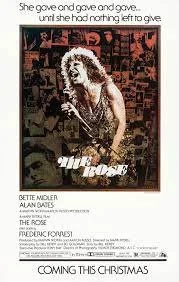
Sheryl and I Sing ‘The Rose’ at the Talent Show

Kind Writers Literary Magazine Contest Runner-Up/January 2023
For my oldest friend, Maureen
The eighth grade talent show had arrived, excitement shivering through each of our classes leading up to Friday go-time. There would be kids playing the piano and guitar, kids break dancing, kids reciting poems. My best friend since Kindergarten, Sheryl, wanted to surprise her mom with her favorite song, an old 1970s tune called “The Rose,” originally performed by someone called Better Midler. I never heard of the song or Bette Midler, but I agreed to collaborate, since Sheryl was too scared to sing by herself. The song began, ‘Some say love…it is a river…’ Not being the most popular girls, it probably wasn’t the best idea to sing about love. We should have chosen an act that had more social mobility, like writing and acting out a one act play or something. Each time we stood up at the podium to practice, the sounds of our classmates giggling, hushed by old Mrs. Crenshaw, the music teacher and director of the show, made my stomach flip a little.
***
The night of the show we prepared at my house, donning matching dresses we bought for the occasion at JC Penny, navy A-lines with matching white Keds sneakers. We watched a Youtube video that showed us how to apply our dark lipsticks, mascara, and black eyeliner. My mother made us each a cloth red rose to attach to our left shoulders, pinning them on herself.
‘You two look like the Andrews Sisters or something!’ she said. Part of being young is having no idea what adults are talking about half the time. She seemed really happy, though, so I just said, ‘Thanks, Mom.’
At the school gym, Sheryl and I went to the bathroom to deal with my already intensifying sweating problem. Even though I laid the antiperspirant on thick, large wet circles emerged from under my arms, gaining headway with each passing moment. Known in our class as Sweat Stain Salinger, I’d grown a tough resistance to ridicule. Still, Sheryl and I had no choice but to take strong anti-sweat measures before things got worse, blow drying the pits of my dress with the bathroom’s hand drier while I hid half-dressed in a stall. A faint smell of deodorant and body odor wafted in the air as Sheryl reached over the door to hand me paper towels to wedge under my arms. Damage control completed, we headed out to line up for the show.
Once we made it to the wooden podium and looked into the blurry abyss of classmates, teachers, and parents on the gym bleachers, I glanced at Sheryl’s normally comforting face but found a kind of lifeless expression highlighted by her fogged up glasses. Someone shouted, ‘Sweat Stain!’ much to the amusement of the crowd. I took a deep breath, the music started on cue and we began to sing, ‘Some say love…’ I wish I could say I saw friendly faces of friends, but I didn’t. Everything looked swirly. Our mouths were busy opening and closing, pushing out lyrics, when Sheryl’s right hand wandered from hanging by the side of her body to the podium, then to the paper before us. Inexplicably, she started tearing at it, tugging and ripping with her right hand as she held it straight with her left. At first the tearing seemed unimportant, until she began eating into the lyrics themselves, when we were only halfway through our song. Small tear by small tear, the words disappeared before our eyes, and though we had practiced a hundred times, our fledgling security began sliding away with the slowly eroding lyrics.
The giggles began in my shoulders, which shook, at first gently and then with more gusto, sending my entire torso into waves of convulsions, the laughter rising up in my chest, up my throat to my mouth, swallowing the song and erupting. In an awful chain reaction, Sheryl started to giggling too, the wet and shredded page pressed under her hand. I don’t know who ran first, but in a second, we bolted from the stage while a torrent of hilarity burst from the audience, drowning out poor Mr. Evans’ plodding away on the piano. We entered the bathroom panting, my sweat stains dripped down to my waist. Our laughter switched instantaneously to tears. Anger steamed out of my ears.
‘That’s the stupidest thing I’ve ever done! Why did I agree to this?’ I said, kicking the wall.
‘It was totally my fault,’ Sheryl said. ‘I’m the one who ripped the paper.’
We inched our backs down the bathroom wall and bawled into the rough paper towels yanked in despair from the dispenser. We could already hear some kid playing Pachelbel’s Canon. The bathroom door opened and I sprung from my crouch, readying myself for a quick exit.
‘C’mon,’ I said. But there stood old Mrs. Crenshaw.
‘You girls were FABULOUS,’ she overstated, standing uncomfortably in her already tight pencil skirt, ‘That is my favorite song. Ever,’ she pulled old, used tissues out of a pocket and handed them to us.
‘We totally blew it,’ Sheryl said, still crying.
‘You know I once saw Sammy Davis Junior -Sammy. Davis. Junior. - in Atlantic City mess up a song and have to start over. Sammy Davis Junior.’
I glanced at Sheryl to verify that she too had no idea who Mrs. Crenshaw was talking about, but offered a small smile.
“I printed out new lyrics. I think you girls should get back out there.”
Unsure, but feeling the freedom of people who have nothing to lose, we straightened our slouched bodies, cleaned up our smudged eyes, and headed out, holding hands as we sang ‘The Rose’ to completion, Sheryl and I high-fived and bowed. The crowd went wild. We didn’t know if they were supporting or heckling us, but we really didn’t care.

Regrets, Reversals

Cafe Lit, July 2022
Cora immediately recognized her new neighbor, Shirley, standing on the porch, huffing and puffing, wearing a green caftan and holding a pug.
“Are you going to this Ladies Pot Luck thingy?” she asked without any other greeting. Cora half smiled, which Shirley seemed to think meant yes. She turned, her green garb flowing with her large body. “See you later then!”
Cora, straining to hold her grocery bags, responded with only speechlessness and dread…

The Coven

Duck Duck Mongoose, July 2022
Far From Home
The twinkling lights spread out in darkness below. Cora permitted a wave of premature homesickness as she looked over the plane’s wing, down at the city in the early morning hour. All those strangers, she thought, tucked in bed or maybe getting up early to make tea, acting out the routines of a mundane Tuesday in Glasgow…

What Ever Happened to Harriet Grieves?

Terror House Press Magazine/July 2022
Now that ten year old Harriet Grieves had the VCR, she no longer had to stay up late to watch her favorite Bette Davis films, she could tape them and watch them over and over. Bette. Those eyes. That voice. Never, never, had Harriet seen anything like Whatever Happened to Baby Jane? (1962)…

My Father the Principal

Books ‘N Pieces/July 2022
Third Place Winner, short story contest
Pep Rally
Warr-i-ors! Warr-i-ors!
Back when I started there, in seventh grade, my mother and I attended the St Michael’s football games together. Standing in as Dad’s wholesome family unit, we perched on a bleacher, our smiles chiseled and stuck. Principal Dad came out on the podium in his purple and white jersey and the crowd went wild. His cheeks matched his fire-red hair as he pontificated about the glory and history of our school. He raised his fist in the air at the end and asked us all to stand to sing the school anthem. People were crying. I’m serious. Tears of pride, joy, nostalgia, maybe all three. He had that effect on people. He got the crowd chanting Warr-i-ors! Warr-i-ors! Over and over again. But somewhere in there the crowd switched and started chanting Mc-Ardle. Mc-Ardle! Dad beamed from his place before us, his mouth closed in a tightening of pride, his eyes full of water. We were with him, totally, and he could have no greater joy.
Warr-i-ors! Warr-i-ors!


Two Birds

Borrowed Solace/June 2022
Morning
I reach for my cane leaning against the nightstand, heave myself out of bed, hobble over to the bathroom. There, I do my business, put in my dentures, struggle out of my pajamas and into my pants and shirt, begin my journey to the kitchen. I walk slowly, very slowly, the hallway yawning before me.
Once arrived, I get out the pill bottles and start counting. Next, I pour Jack’s juice and cereal, toast and butter my English muffin, and then, at last, pour the coffee and sit down.
Jack rolls his walker into the room.
“Morning, how you feeling?” I ask my husband.
“Eh,” he pulls out his chair and gets settled. I roll my eyes. Typical. This man has never said he had a good night’s sleep in our entire sixty-five year marriage. With his memory problems, it’s worse. Even if he did sleep well, he wouldn’t remember. He flips on the TV on and pours his milk on his cereal. He doesn’t ask me how I feel.
The TV blares with bad news.
Helping
Jack wants to feel useful, he wants to help me. Pushing his walker towards the dishwasher, he stops and stares, totally puzzled. He has never emptied the dishwasher in his life.
“How do you do it?”
I explain the concept of taking things out and putting like things together in designated places and leave him on his own to deal with it. After the deafening crash, I crane my neck around to see Jack’s face frozen in surprise as he stands with a tangle of silverware at his feet. I pull myself out of my seat, holding on to the table, going to help.
“I can finish, Trudy, you go sit,” Jack says, observing me struggling. There is shame in his smile.
Not Listening
Jack smashes a fist down on the kitchen table, shaking the dinner plates.
“I’m in pain and no one cares, no one listens,” he says, “ I need to go to the doctor, the hospital, something.”
“Do you want to go to the nursing home?” I snap, which keeps him quiet.
My Turn
One particular night in a sea of hundreds uneventful ones, I get up from bed to use the bathroom, forget my walker, and trip over the footstool beside the chair. As I go flying and land with a thud and a gasp, I feel the fear rise up in me. This is it. I’ve done it now.
“Oh, Trudy, let me get you up. Turn on your side, yes, now scooch over this way, that’s it,” Jack’s face hovers above mine, he speaks softly as he pulls me, ungracefully, up.
My breathing is funny. Jack squints as he observes me.
“I just need to lay down,” I say. He guides me to the bed, but I cannot take a deep breath. Jack is again examining me. For once, he remembers something.
“911,” he says, “That’s the number and I’m calling it.”
Home
After staying at the hospital a week for a punctured lung, I’m so grateful to be home. Jack slaps together a peanut butter and jelly sandwich, balancing the plate with one hand as he guides his walker with the other. He fumbles with the remote, replaces the news with the golf.
We eat in the silence, the old round clock ticking on the wall behind us. Jack moves his hand on my arm, feeling down the boney length of it. He grasps my hand, we both hold on.

Cleaning Out

Grande Dame Literary Journal/May 2022
Honora and I adored our much-older sister, Mary, our somewhat-surrogate mother. She taught us how to pray and disco dance, wrote us detailed, loving letters from college, sketched us pictures of her professors. We held her on a pedestal, envying and celebrating every one of her accomplishments.
“Mary! Mary! Mary!” we nagged, pulling on her sweater sleeve as she, fresh home from college, talked to our mother. “Mary! Mary! Mary!” Her attention was our endless desire. We cried every time she left home and went crazy with excitement every time she returned.
Mary died in July. It is now November, almost her 61st birthday - the first one she won’t celebrate here on Earth. Her husband, Marc, asked Honora and I to clean out her closet. “I can’t even open it,” he said sadly.
As children, the youngest of seven, Honora and I were professional snoops of the five “big kids.” They were so much older and such a mystery. We had to get our information wherever we could, mostly through their artifacts. Mary’s room was of particular interest, her door at the end of the hall, a destination. Our small fingers traced the talcum powder on the surface of her dresser, our noses inhaled the faint scent of Love’s Baby Soft perfume. Her braided rug scratched beneath our feet. The closet door creaked open at our command, revealing a space bursting with a teenager’s life.
Hangers jutting out, boney shoulders emulating their owner, Mary’s clothes invited and inspired, revealed what comes next. Green and white plaid school uniforms, summer ones in pastels. The seventies’ groovy rainbow colors, form-fitting shapes. Peasant style and midriff tops, gingham dresses, tiered gowns in bone, rose. Her hems dragged around us, trailing our stocking feet, picking up dust. We posed and practiced with her field hockey stick, laced and unlaced her well-worn basketball sneakers, held her bell bottoms up against our frames, the waist matching up to our chests. Slipping our feet inside her high-heeled sandals and platform shoes, we strutted around her room, giggling.
There was always a reason to return, open the door again, see what was moved, what was different. We noted every change, addition, or subtraction. Each one told us there were things still to know about our sister, about life, the world.
Now, adults, we open her closet door, stale air offering familiar smells. Her bathrobe, the cloak of illness, is humped on a hook at the closet’s edge. Peering deeper, we recognize the other side of the story. There is the bruise of color, the pulsation of greens and pinks and purples and reds, bursts of yellow. Then there are patterns-stripes and florals- and textures - velvet and lace. Her oldest clothes, representing the eighties and nineties - much more conservative, preppy - they are the before-cancer clothes, baggy, square, padded. The frilly, feminine clothes -her 18- years -of- stage- four- cancer clothes- they represent the final version of the living Mary, some combination of all she was before and all she wanted to be. In the deepest recesses reside the steadfast soldiers, the milestone clothes: communion and wedding dresses, academic robes in blue and red. Tossed to the side are the shoes, many pairs not worn, shoes her broken, nail-less feet could not tolerate.
As it goes with this process, grief, we cry, but we laugh too. We try everything on. For some reason, everything fits me. We pour bubbly, Mary’s favorite. Her adult sons and Marc observe us from the other side of the room, looking at their phones, making small talk. When the time comes to haul out, our nephews fill the car for the thrift store. What’s left: an empty closet and some large reusable grocery bags stuffed with treasures to keep and disperse. We get a broom and sweep the last dust bunnies out. Then, we stare into the closet again, this time processing the emptiness. Perhaps we were expecting a different feeling, a task complete, but no.
No amount of experience could prepare us for this, this final job. Honora and I, two women in our fifties, forever little sisters, sorting through what once was gold, but is now cloth, leather, plastic, straw, wool. She is gone. We can only take what we can, learn what is left to learn, shed our tears of sadness and joy, move on.

Halloween 1977

Parliament Literary Journal/May 2022

The Sirens Call E-Zine/Halloween 2023
There is the house in the center of everything, tall and grey, poking up into the dimming sky. The silhouettes of women appear in its windows. They are sliding around, upstairs and down. They dance together, hold each others’ hands, twirl in circles beneath a crystal chandelier. Some say they’re sweet old ladies who mean no harm. Some say they’re leaders who have given much to the town. Some say they are neither of those things.

Things to Do at the Pinewood

Stone Canoe/May 2022
You could, of course, drink beer, maybe a toasted almond, a sex on the beach.
You could feel cool being known by the bartenders or the bouncers. You could see
friends from your classes or other dorms. Fist bump. High five. Maybe even a peck on
the cheek.
You could bum a Marlboro Light and inhale, strain your formerly pristine lungs.
You could pick “Maggie May” by Rod Stewart on the jukebox. You could stand with your roommates in a circle. You could scream the words to “New York New York,” arm-in-arm with your fellow barmates, strangers. You could think these were the best nights of your life and almost believe it.
You could be ignored by guys and feel bad. You could be the annoying sidekick to your beautiful roommate. You could tell yourself you don’t care. You could hope a guy will buy you a drink. You could kiss some guy from your English class who never spoke to you before.
You could kiss an old guy, because old guys hang out at the Pinewood.
You could be ditched by the so-called friend who begged you to come out even though you had an exam the next day. You could have a long involved conversation with another girl on the bathroom line and say, Promise we’ll be friends for life? Promise? Promise? You could force a stranger to make that promise. You could regard your blurry face in the dirty mirror above the sink and try to fix your smudged eyeliner. You could tuck your hair behind your ear and miss your ear and laugh.
You could find yourself alone in the crowd.
You could allow your mind to wander, above the noise, the music, think about better places. You could promise yourself to never come back to the Pinewood again. You could keep that promise.

Dust to Dust

Secret Attic/#28
“I was backing out of our driveway and Amanda Manchester came barreling down the street in that stupid giant pickup truck,” June told Ryan as she rolled a meaty mix into tight little balls, “And you know what? She had one of those Catholic things-like that dirt on her head? She gave me the finger and yelled out her window, ‘Watch your ass!’ Can you believe that?”
“Jeez,” Ryan said, “And I thought I was an ass this morning.” June stopped rolling her meatballs and gave him that look she gave, neither hot nor cold, with just one side of her pink lips turned up.
“You’re not off the hook yet,” she said. Ryan raised an eyebrow, poured a glass of white wine for his wife, leaving it beside her on the counter.
“Then she started texting me.”
“How’d she get your number?”
“Duh. From the neighborhood list,” June rolled her eyes, a habit after one of Ryan’s idiotic questions. He put his beer bottle on the table and picked up Lucy, holding her against his chest. She grabbed his shaggy blonde hair and said, “Daddy!”
“She texted me this crazy sh-stuff about how she cares about safety, how people like me-like us I guess-don’t care about the safety of the children of the neighborhood.” June slammed the oven door shut and blew her bangs out of her flushed face.
“What a bitch,” Ryan said,” How’d it end up?”
“First I wrote a nasty text, then deleted it and blocked her number.”
“That’s mature,” Ryan said absently.
June’s eyes narrowed as she gripped the granite island.
“I could really use some support from you right now,” she said. Ryan put Lucy down, approached June, opened his arms. She stepped closer to accept his hug, but her body remained rigid, like a plank. “I just want to get along with people. That’s all,” June said, pulling away, retreating to her place behind the counter.
After dinner, they bathed Lucy, washed between her toes, pulled her hair into soapy spikes atop her head, read and prayed with her, and watched her fall asleep. June showered, wiggled into her nightgown and into bed, swiftly rejecting Ryan’s attempt to initiate makeup sex by feigning sleep. Soon Ryan snored away in peaceful bliss, but June’s eyes remained open. Amanda Manchester- that black smudge wedged in the wrinkle of her crowded brow, that nasty voice raised in that maternal reprimand. June lay awake chewing on the cud of contempt, covered in the darkness of her bedroom, thinking, steadying her breath.
By the time the morning light filtered through her bedroom window she’d had an epiphany: cookies. June decided she’d make cookies. Good mothers and neighbors made cookies, she thought. She baked, cooled, and packed them for delivery, then pushed Lucy in her stroller along the neighborhood sidewalk, each step bringing her closer to Amanda Manchester’s. On the way, they ran into Leslie Lopey walking her three year old son. June filled Leslie in on the Manchester incident, pumping the narrative with juicy exaggeration.
“What do you know about her?” June asked Leslie.
“Uh. Not much? She has a dog?” Leslie said, “Hey it’s my birthday Friday and-“
“Kids?” June interrupted.
“Dunno? Maybe grown up ones? I gotta go,” Leslie said, wheeling her son away.
“Nice talking to you, Leslie,” June lied.
Amanda Manchester lived in a pristine white colonial with a square lawn, red geraniums, and a closed garage door. June knocked lightly at the front door and waited while Lucy squirmed in her stroller.
“Want out!!” she demanded. June sighed, unsnapped the straps and freed Lucy to toddle across the lawn while June waited. Finally, she abandoned the cookies and note on the step, realizing soon after Lucy was nowhere in sight.
“Lucy!” she whispered urgently. “What’re you looking at?” June said, finding her daughter squatting beside a cellar window. “Don’t you ever, ever, run away from me again!”
“Hand!” Lucy said.
June lowered herself beside her daughter, squinting to study the handprint on glass engaging Lucy’s interest. The print moved, causing both June and Lucy to scream and jump, yet their eyes remained fixed. HELP-June read the word printed across the palm of the living hand. The hand slapped at the glass; a muffled, unintelligible voice murmured on the other side. June sprung from her crouch, dragging Lucy back to the stroller. As she walked briskly home, legs like pistons, she met Amanda Manchester’s big rig. June stopped in her tracks, breathless.
“I just want you to know I’m sorry about yesterday. I said terrible things. I had a bad day with my teenager,” Amanda called through her passenger side window, then parked the car, unbuckled her seatbelt, and got out, moving decisively toward June and Lucy. June felt her protective instincts kick in, wanted to bolt, but Amanda did not attack, she embraced. For the second time in less than 24 hours June found her stiff body engulfed by strong arms. This time, she softened.
“I just dropped cookies at your place. I think we saw your daughter. Downstairs?”
“Oh. You know how teenagers are. She’s sulking down there.”
A pause ensued in which June looked down at her own daughter sleeping in her stroller.
“I know,” June said, “totally.”
“You’re sweet,” Amanda said. “I’ll be sure to give my girl one of those cookies.”
June said goodbye and began to stroll home. She turned to call back to Amanda, “What’s your daughter’s name?” but Amanda had driven off already, the pickup’s red brake lights, like two red eyes, grew smaller in the distance.
June continued her short journey, kicking herself for judging others so harshly. She hadn’t been fair to Amanda. You just never know what’s going on in someone else’s life, she thought. She really just wanted to get along with people, that’s all.


Meeting the Father

Secret Attic/March 2022
Driving there, I thought how strange, to be meeting my son’s father, a man he had never met and possibly would never meet. Still, I hoped. Maybe this is what this whole thing - the cryptic message sent through email, this rendezvous at a coffee shop at 10:30 AM on a Tuesday in October-was all about. Did Paul remember this was the month it began ten years ago? Was there a significance? Was this the day I dreamed of, the day he came to me and begged my forgiveness, the day he would leave his life and come back to us?

The Session

Every Day Fiction/April 2022
Miriam entered my minimalistic office, small and hunched. Her blue and white habit, that of Mother Theresa’s Sisters of Charity, complimented the harmonious greens I chose for my walls. Instead of dark skin, hers was translucent, glass-like, her hair and eyelashes white. If I squinted, I felt I could see right through her to the back wall.
“It all started so long ago,” she said almost immediately, her small hands clasped in her lap.
“What?” I asked.
“When I found out I was pregnant. In that very unusual way.” She touched her sleeve, avoided my steady gaze…..

Lost at Sea

Thuggish Itch - By the Seaside/Gypsum Sound Tales/March 2022

Hot Pot Magazine/January 2023

Birdy, Issue 116, August 2023
Sadie had grown accustomed to small pleasures, short respites from grief. Waking each day at the first shafts of light through the window, she needed to rise and move, riding her bike along the Cornneck Road, the ocean over one shoulder, the breeze in her face. She pushed her pedals all the way to the end, to the stretch of beach leading up to the North Lighthouse. There, she’d perch on a rock and survey the many stacks of stones worn smooth by the sea, totems erected by tourists and other visitors to this place. She watched and listened to the seagulls above, the ferries and cargo ships crossing in the distance, the seals poking their little black noses out of the choppy waves. This was about as much peace as she could get.


The Turning Point

Every Day Fiction/March 2022
In that dreary mid-March, mid-semester time, Larry found it hard to get up. Long after his wife, Cheryl, left the house for her student sewing circle and after his own alarm sounded, he lay awake. He listened to a dragging sound, something heavy and dull, scratching against outside pavement. Perhaps it was a dead body in a garbage can, he speculated, hauling his own load from a rumpled bed. While doing so, he accidentally kicked a plastic water bottle, of which there were many spread around the room, under the dresser…

Apparitions at Sea

Gateway Review/January 2022
My friend Gabby’s father’s car speeds down the highway toward Avalon, New Jersey. Billboards, trees, exit signs whiz by in a blur. An overcast summer day, my heavy mood sits like humidity, like fog over the bay. To be honest, I feel guilty, leaving Mom alone. She looked like she was going to cry when I asked her if I could go on this trip with Gabby’s family. But Mom talked to my therapist, Rachel, and Rachel said it would be good for me to get out of the house, the scene of a lot of sadness.
I mean, Dad’s oxygen machine just got sent back yesterday. The pillow in his chair in his mancave still had his head’s indentation in it. I had to fluff it up to get rid of the dents, regretting it instantly. I smothered my face in the pillow and breathed in, smelled it, examined it for some hair, a flake of skin, some trace of Dad. Gross, weird, I know. But everything is strange now. His sunglasses on the mantel, his wallet on the desk. So Mom said, “You know, Gracie, this might be just what you need, this trip.” Gabby reacted a little too positively, saying, “This will be so great!” It’s ok, no one knows what to say to a 13 -year- old whose dad just died of cancer.
We arrive at the house, a small white cottage about a block from the ocean. We throw our bags down and immediately jump into our swimsuits, run down to the beach. Kim, Gabby’s mom, chases us with sunscreen. I feel my heart race as I see the ocean. This feels right. I can sense the cloud over my brain shift a little. Above us in the blue sky a biplane passes with an
advertisement rippling out on fabric behind its tail. I look up and read, “Karaoke tonight at The Deadman’s Drift - 8 PM.” When I blink the letters realign, “Gracie, don’t forget I love you! Daddy.”
Saliva catches in my throat. I think of the letter he wrote me a few months ago, the one he read to me in the kitchen, at the counter, as though it was any other thing to do, with Mom in the background, pretending to be busy washing a dish. The letter where he told me he would always be with me and that I was the best thing that ever happened to him and Mom. The letter where I realized this was really happening. My dad was really dying. I purposely did not bring that letter to the beach. It’s hard to read it again, even though at home I find myself holding it, rolling it up in my fist as I sleep. I don’t want Gabby to know I do that, so I left it in my jewelry box on top of my dresser.
*
Gabby’s dad, Pete, makes pancakes for breakfast the next morning, our first full day at the beach. Kim bustles around, setting the table, turning the sausages. They both jump a little when they notice me standing rubbing sleep from my eyes at the entrance of the kitchen.
“How many cakes do you want, Gracie? Orange juice? Double macchiato espresso?” Pete jokes.
I never told him he could call me Gracie.
“Um two. Orange?” I sit at the table, hoping Gabby gets up soon. Kim puts juice in front of me and touches my hair softly. “Do you mind if I take my juice out on the porch?” I ask.
They both answer quickly.
“Sure. Absolutely. No problem! Make yourself at home!” a jumble of words that kind of pushes me out the door. Situating myself in one of the two rocking chairs, I notice, without alarm, Dad sitting in the other one. He looks strange. Kind of small. He smiles at me.
“How are you feeling?” I say.
“Good. So much better, sweetie.”
I watch the rocker to see if it moves, but it doesn’t. I don’t question his presence. I know he’s there and I know not to say anything to anyone about it. I look out on the ocean and think how perfect Gabby’s family is, just because they are all alive.
Later that morning, we meet Hannah, a girl from a neighboring house. She is tall, statuesque, but she is only one year older than us. She is busy burying her brother, Tate, in the sand.
“Hey, girls, want to help make my brother disappear?” she asks. We run to join in. I push the flashes of Dad’s burial from my mind. Hannah asks us if we want to roast marshmallows with her later that night. I say yes a little too eagerly.
*
That night, gathered around the fire in front of Hannah’s house, as I extend my skewer into the heat, Dad’s face comes into the flames. I remember how he always roasted his marshmallows slowly and evenly. I usually just let mine burn black, blow out the flame, and bite into the charred molten sugar. Tonight I try to do it like Dad, focusing on turning my marshmallow in small increments, keeping it a consistent golden brown.
Hannah asks about our families. She has not met Kim and Pete, who easily agreed to us hanging out with her at night. They were seated together on the porch doing a puzzle when we told them where we were going.
“My parents are engineers.” I say too quickly.
Gabby jerks her head up from staring at the fire.
I shoot a look back indicating, Don’t say a word.
“My parents are spies,” Gabby says, giggling. We all crack up.*
Mom calls late in the afternoon on the third day of our week at the beach. She sounds alright, maybe a little weepy.
“You ok, Mom?”
“Just missing you. I was thinking we should get a dog,” she says.
“Uh ok, but Dad hates dogs,” I remind her.
She is silent, then says, “I know.”
When I get off the phone I feel like ten pound weights are strapped to my legs.
*
Downstairs, I find Gabby, Kim, and Pete playing Twister, shouting and carrying on. Kim removes herself from the cluster of limbs.
“How’s your mom?” she says breathlessly.
“Fine,” I say.
Turning away, I see Dad sitting at the breakfast bar, still looking small, with a huge bowl of tortilla chips and salsa next to him.
“Can I play?” I say.
“Sure! Sure!” They all stand up straight as I move closer. Pete and Kim move to the couch as it becomes just Gabby and I playing Twister alone.
*
It’s July 4th, the Thursday of our week at the beach. We are out in the sand and everyone has those light up gel necklaces and bracelets. Some people are illegally setting off small fireworks. We had a good day, playing this bowling game on the beach with Hannah and Tate. We all took our boogie boards into the water and rode the waves for hours. We made turkey sandwiches on rye bread for lunch, with lots of mayonnaise and salty chips, shivering in our wet suits as we ate in the cold house.
I look up at the stars and remember Dad with his telescope. “I’m an astronomy nerd,” he always said. I would become instantly bored, unable to listen when he told me about the stars, but tonight I can’t resist gazing upwards. My eyes move from sky to sea, where I see Dad again. This time, he is just sitting in a small row boat, contemplating the night sky, as I know he would be, if he were really here. I watch the boat bobbing up and down. His body is so still, so peaceful.
Hannah arrives, bounding down the beach toward our group. “Woohhoooo!” she screams
as she runs, her long, strong legs carrying her gracefully. I smile. She is so funny. So happy. She
extends this cool beach ball full of light toward me.
“Hey, Grace,” she says, stopping short, spraying sand on my shins. I take the ball from her, feeling warm inside and out, but when I look at her face, I can see that pity and fear that everyone else has. I feel so angry. Gabby, blabbing about my business. I drop the ball of light and run into the house. Drama.
*
No one runs after me as I expect, as I kind of hope. They are all partying on the beach, not noticing me. I call Mom crying.
“I’m sorry. It’s so hard,” she soothes.
At one point I break through both our tears and say, “And Daddy is here!”
“What?” Mom says.
“Daddy is here. I saw him on the porch and at the fire and in the ocean.”
Silence.
“Yes. He is. He is in all those places,” Mom says. I am so relieved she does not argue. I ask if she will stay on the phone as I go to sleep, without brushing my teeth, with crumpled wet tissues all around me.
Gabby does not say a word when she comes in, just goes to bed.
*
On our last day, everyone seems so grumpy. Kim and Pete both have headaches.
“We’re getting out just in time. A storm is kicking up,” Kim says. They snap at Gabby and me a few times about stripping our beds, collecting our towels, helping to load the car.
Let Gabby clean up, I think. I am too excited to go home and see my mom to be bothered.
I walk out to the beach one last time, pushing into the strong wind, letting it whip my hair. I sit down on the sand and stare at the sea. Dad has dissolved into everything—the foamy caps on the waves, the grains of sand sticking to my hands, the light burning through the morning haze. I stand to run into the surf, the shock of cold not stopping me, my feet enduring the pain of protruding shells, worn by time and loss. Finding the part of the sea floor that drops off a little, I swim out, flip over, allow myself to float, ignoring Gabby’s faint calls from the shore.
Just for a few minutes, I want to stay here with Dad, feel the soft movement of the sea beneath my back, my outstretched arms. I want to feel him surrounding me, supporting me. I want to enjoy the sun on my face before heading home.

Not Alone Anymore

Little Somethings Press #4/January 2022
Julia became distracted from the television by a flicker in her peripheral vision. A closer look revealed a swooping and darting creature-a bat!- in the darkened living room. Julia darted herself, into her bedroom closet, where she hid until morning.
#
She awoke on a heap of clothes to the rattle of the backdoor. Jackson -here to get the rest of his stuff. She thought of staying there in the closet, but he would open it, look at her with that pitying smile, the one he used when he told her about Becca.
Julia forced herself out into the daylight of her bedroom.
“What happened to you?” he asked, garbage bag in hand, ready to empty his dresser.
“There was a bat. In the house.”
“Call an exterminator,” he said, back turned.
#
Afterwards, she stared at computer images of bats, noticing how their ears were like Mickey Mouse’s, their eyes were so innocent. She hadn’t known bats had just one breast fed baby a year, or that they ate those hateful mosquitoes and pollinated foods like avocadoes and mangoes. She discarded the information about rabies, already feeling quite insane.
#
Night fell. Walking from room to room, Julia turned off light after light, proceeding in the pitch darkness, sensing her way easily through the house. She thought how blackout curtains would perhaps be more welcoming, hospitable.
She awoke the next morning feeling slightly disappointed. No bat encounters, as far as she knew.
After breakfast, washing dishes, Julia jumped, noticing a bat clinging to the kitchen curtain, shaking. Shutting off the faucet, she studied her special visitor, listening to its slight sweet chirps and moans. Julia began to shake and moan too, holding onto the edge of the sink, collapsing into the sobs she had held back for so long.